Table of Contents
The Big Office Question in 2026
As we step into 2026, one workplace debate still lingers:
“Should offices be open or private?”
With the rise of hybrid teams, wellness needs, and focus-friendly environments, the layout of your office isn’t just about looks—it directly affects your team’s productivity, mood, and creativity.
So, how do you decide what’s right for your business?
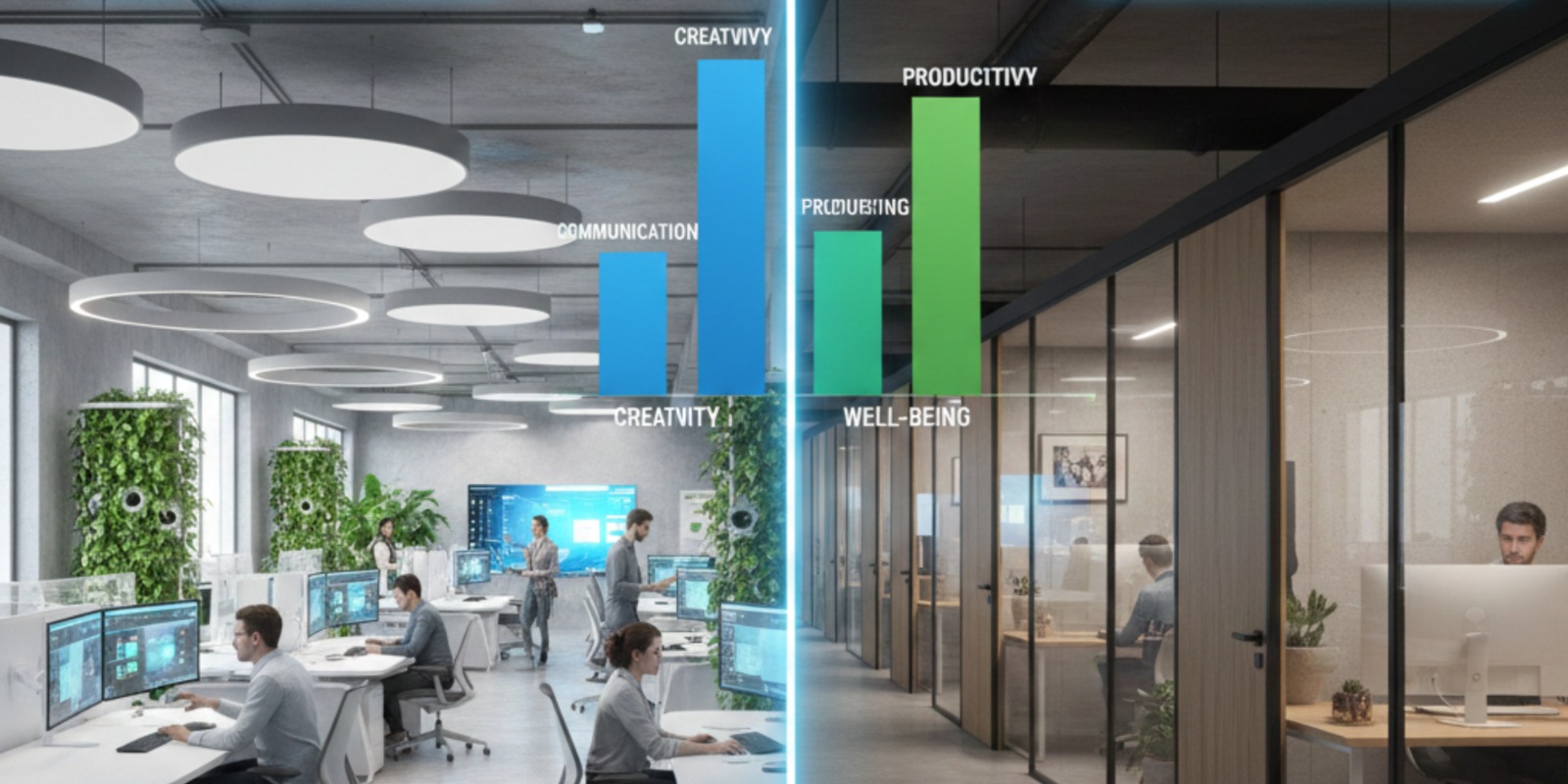
Let’s compare Open vs. Private Office Designs using real-life examples, French-European design principles, and what today’s workers really want.
1. What is an Open Office Layout?
An open office has:
- No walls or minimal barriers
- Shared desks, collaborative zones, beanbags, or lounge corners
- A modern, airy, startup vibe
Good for:
- Creative teams (marketing, design, sales)
- Fast communication
- Fostering team culture
Watch out for:
- Noise distractions
- Lack of privacy
- No space to focus deeply
Real 2026 Example:
A fintech startup in Downtown Dubai redesigned its office with open zones + soundproof phone pods. The result? More creativity, but too many people wore headphones to block the noise. Solution? They added soft partitions and “quiet corners.”
2. What is a Private Office Layout?
A private office offers:
- Individual rooms or enclosed spaces
- Dedicated workstations
- Defined zones for focus and meetings
Good for:
- Law firms, finance, executive teams
- Deep work and confidentiality
- Client-facing meetings
Watch out for:
- Less interaction
- Higher space and construction costs
- Feels isolating if poorly designed
Real 2026 Example:
A French investment firm in Abu Dhabi adopted semi-private cubicles with acoustic panels and elegant glass doors. This blended privacy with openness, creating a quiet but premium workplace feel.
3. What Do Employees Want in 2026?
Today’s teams want balance.
Surveys show that:
- 68% of workers feel more productive in quiet zones
- 74% still want collaboration spaces
- 3 in 5 remote workers feel disconnected when returning to loud, open offices
Solution?
Use a “Zoned Workspace Design”—a mix of both.
Break your floor plan into:
- Quiet Focus Zones
- Collab Areas
- Phone Pods
- Meeting Rooms
- Lounges or Wellness Corners
4. What Role Does Design Play?
Design is more than decoration—it’s strategy.
French-European interior design principles (which are gaining popularity in Dubai and Riyadh) focus on:
- Flow – how easily people move and feel in the space
- Calm colors – soft tones reduce visual fatigue
- Natural textures – wood, fabric, and plants create warmth
- Lighting – layered lights improve focus and ambience
A well-designed office in 2026 is not flashy—it’s functional, human, and health-focused.
5. Cost vs. Value: What Should You Invest In?
Open offices may seem cheaper, but fixing noise issues later gets expensive.
Private offices require more buildout but offer long-term ROI in staff performance and retention.
Best strategy?
Let a professional designer help you map workflows to floor plans, then match that with acoustic panels, ergonomic furniture, and French-inspired styling.
Choose What Supports Your People
Whether open or private, the best office design in 2026 is the one that:
- Matches your team’s work style
- Offers both energy and calm
- Reflects your brand’s values
- Feels like a place people want to come to
At SHTS, we specialize in French-European office interiors that combine elegance with efficiency. If you’re planning your next office makeover—open, private, or both—we’ll help you design it right.
Q1: Is an open office better for small businesses?
Open offices are cost-effective and promote collaboration, but you’ll need smart zoning (acoustic panels, focus pods) to avoid distractions.
Q2: What if my team prefers privacy but we don’t have enough rooms?
Use French-style dividers or sliding panels to create semi-private nooks without closing off the entire space.
Q3: How can I blend both open and private layouts?
Zoned designs are perfect: combine meeting booths, team desks, and calm break areas using layered textures and subtle tones.
Q4: What’s trending in office interiors for 2026?
Biophilic elements, quiet zones, neutral palettes, and wellness features (like light therapy or standing desks) are all hot.